


The proof was in every transaction.
Prove Where
Your Coins Were




SHIELDED BEFORE IT HAPPENED.
Choose your Alibi surface.
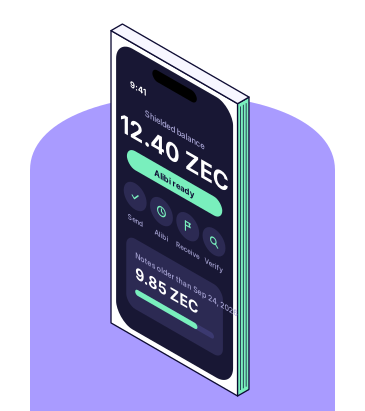
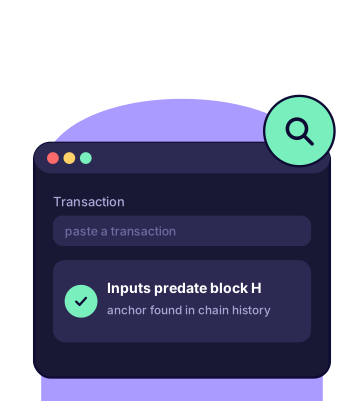
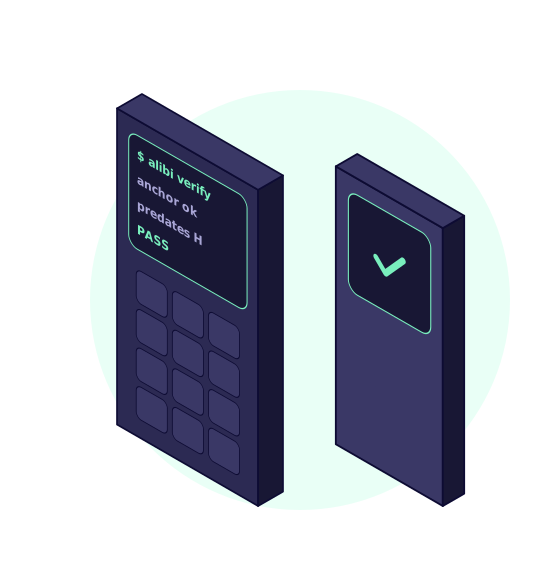
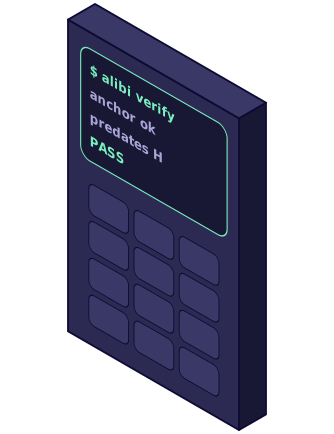
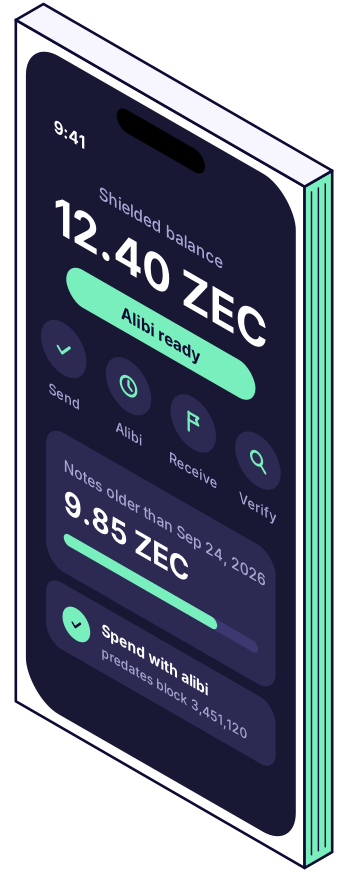
Prove that shielded ZEC predates an incident without showing a balance, a history or an address, from a wallet, a browser verifier or a command line.


KEEP YOUR ALIBI.
Keep your oldest coins old.
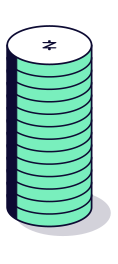
Every payment creates new notes dated to the block they land in. Alibi spends your newest notes first, so the ones that predate an incident are still there on the day an exchange or a swap service asks.



Age-aware coin selection.
Everyday payments draw from the youngest notes. Older notes are only touched when you ask for an alibi.

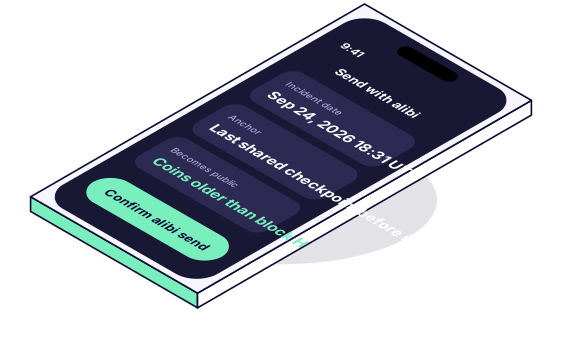




One-tap alibi send.
Pick the incident date. Alibi selects notes older than it, anchors the spend to the shared checkpoint before it and shows exactly what becomes public before you confirm.


NO NEW CRYPTOGRAPHY.
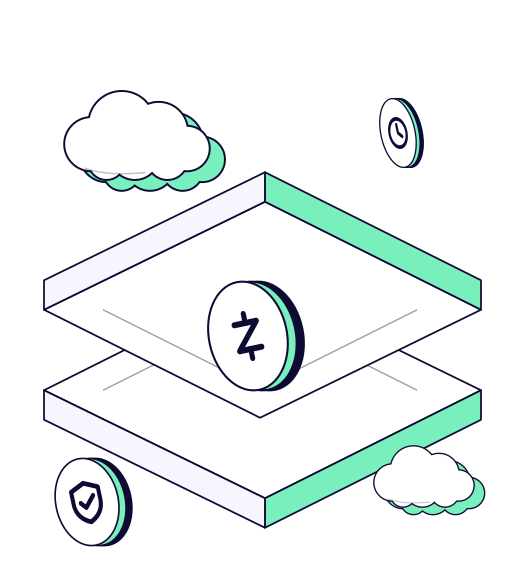
Every shielded spend names a past snapshot of the pool, and its zero-knowledge proof forces each spent coin to be inside that snapshot. Consensus accepts any earlier snapshot. Wallets always pick one from a few blocks ago. Alibi picks the one from before the incident.














No viewing key, no history and no addresses leave the wallet.

Anyone can check an alibi from the public transaction alone.

A forged snapshot fails the proof, and the network rejects it.
Explore what makes an alibi hold.

Unforgeable
A spend against a snapshot needs every input inside it. A coin received after the incident cannot produce the proof.

Your keys, your coins
Alibi runs inside your wallet. Nothing is uploaded, and the verifier needs only the public transaction.

Shared checkpoints
Every alibi for one incident uses the same anchor height, so the anchor marks a group of users, not a person.

No blacklist
The verifier reports the block your coins predate. The checker applies its own incident dates. Nobody has to be accused.
Age cannot be bought
Payments always create new notes, so stolen coins cannot acquire an older date by being paid to someone.
Unforgeable
A spend against a snapshot needs every input inside it. A coin received after the incident cannot produce the proof.
Your keys, your coins
Alibi runs inside your wallet. Nothing is uploaded, and the verifier needs only the public transaction.
Shared checkpoints
Every alibi for one incident uses the same anchor height, so the anchor marks a group of users, not a person.
No blacklist
The verifier reports the block your coins predate. The checker applies its own incident dates. Nobody has to be accused.
Age cannot be bought
Payments always create new notes, so stolen coins cannot acquire an older date by being paid to someone.